STATUS: ACTIVE FILED: JULY 1, 2026 ACTION: DEA NOTICE OF INTENT — SCHEDULE I PUBLIC COMMENT: OPENS MONDAY

The Public Record  ·  Updated July 1, 2026

7-OH
Ban

What you need to know.

As of July 1, 2026, the DEA filed a Notice of Intent to place concentrated and synthetic 7-OH into Schedule I — the emergency track. The clock has started, and the public comment window opens Monday.
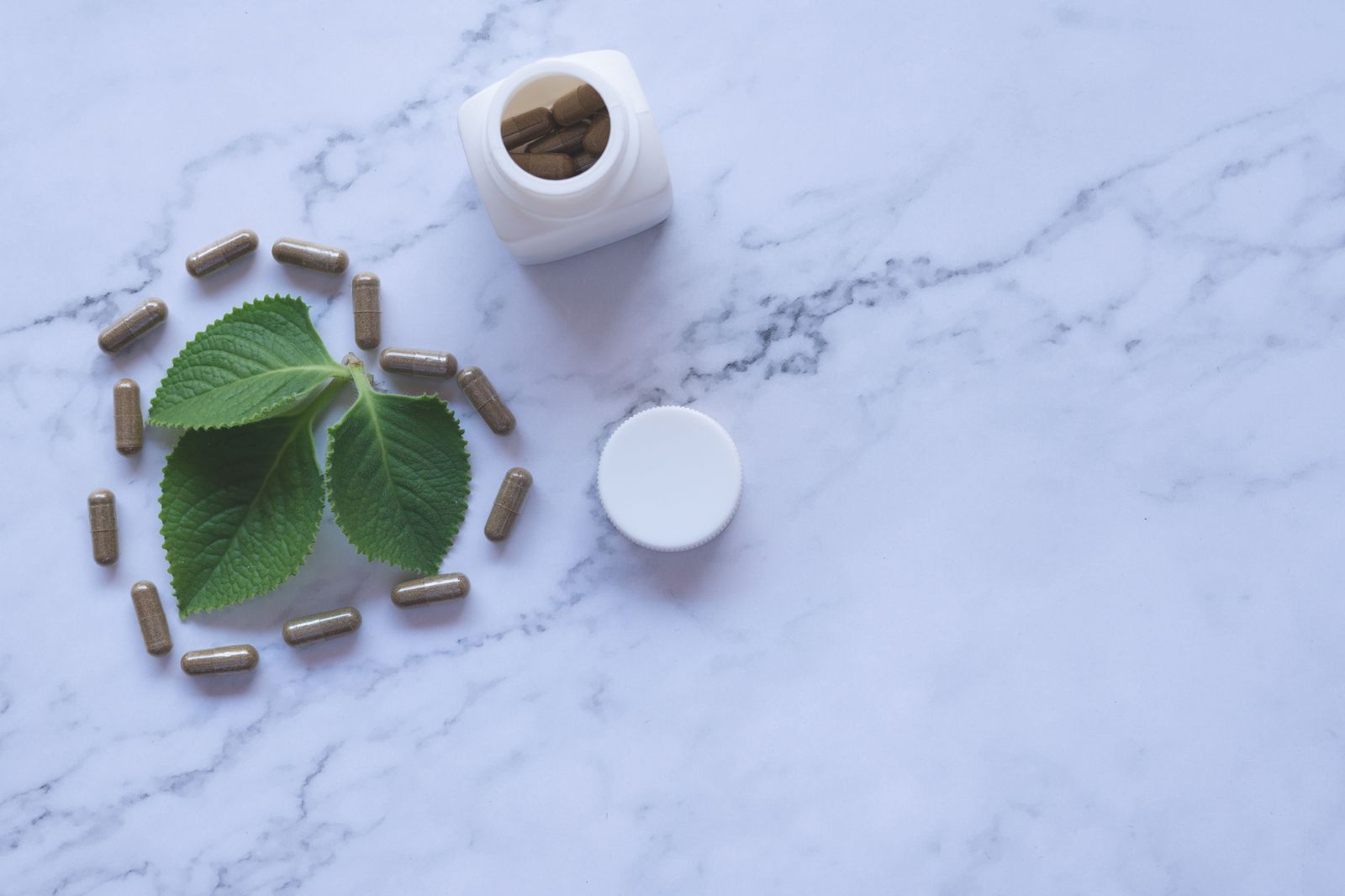
Kratom leaf beside herbal capsules
Notice of Intent
Filed · 07/01/26

01 — The Filing

What they actually filed

On July 1, 2026, the DEA issued two Notices of Intent to begin temporary (emergency) scheduling. One targets 7-OH above a set concentration threshold — the government's own words say this is aimed at concentrated and synthetic 7-OH, allowing the trace amounts of 7-OH that occur naturally in kratom leaf products to remain outside the scheduling action. The other Notice of Intent outright schedules three lab-made derivatives — MP, MGM-15, and MGM-16 — that do not occur in the plant at all. HHS and FDA publicly commended the move the same day.

We believe enhanced kratom alkaloid products should have sensible regulations rather than an outright ban: rigorous lab testing, educational materials packaged with every product, child-proof containers, a 21-and-up purchase age, removal from gas stations and stores that don't check ID at the door, removal from stores that sell alcohol, mandatory age verification on websites, regulated and consistent product naming, and a ban on advertising these products online or otherwise — since ads for enhanced alkaloid products can reach vulnerable populations and youth.

Not targeted

The natural leaf

Whole-leaf kratom (Mitragyna speciosa) contains only trace 7-OH. The filing says it is not meant to capture the botanical leaf.

Targeted

Concentrated & synthetic 7-OH

High-concentration 7-OH above a threshold, plus lab-made derivatives MP, MGM-15 and MGM-16 — sold as tablets, gummies, and shots.
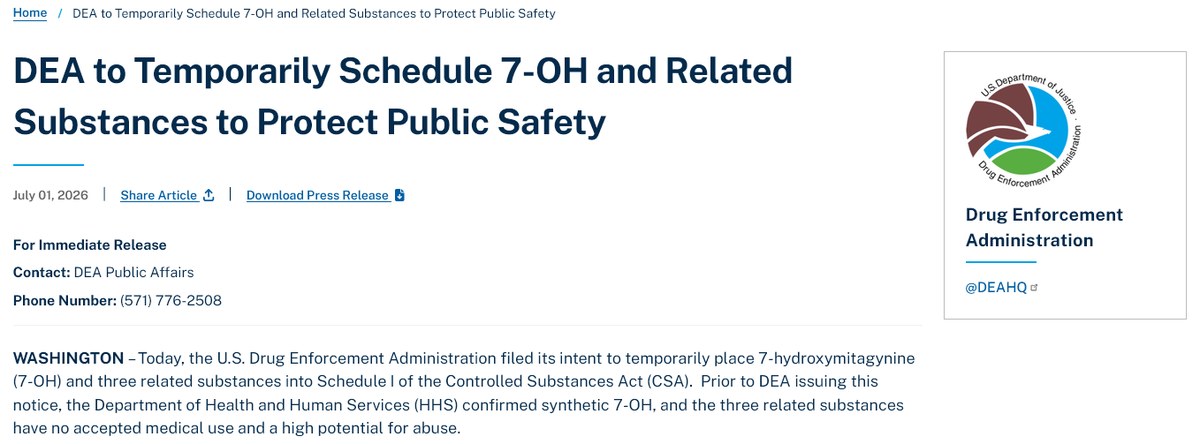
DEA press release headline: DEA to Temporarily Schedule 7-OH and Related Substances to Protect Public Safety, dated July 1, 2026
DEA — Notice of Intent. "DEA to Temporarily Schedule 7-OH and Related Substances." Filed July 1, 2026.
dea.gov ↗
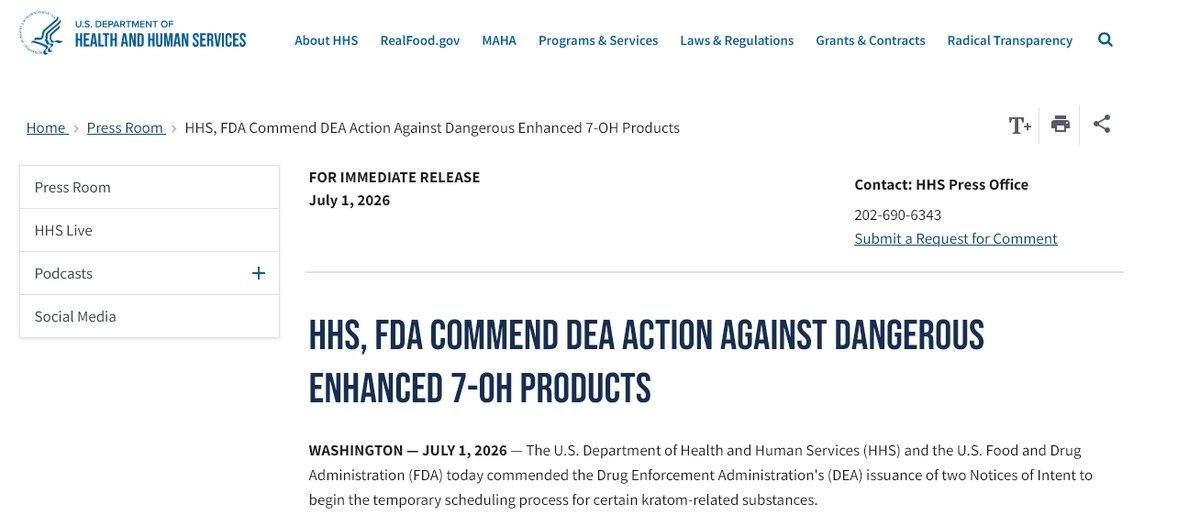
HHS press release headline: HHS, FDA Commend DEA Action Against Dangerous Enhanced 7-OH Products, dated July 1, 2026
HHS / FDA — Statement. "HHS, FDA Commend DEA Action Against Enhanced 7-OH Products." July 1, 2026.
hhs.gov ↗

02 — The Record

How we got here

Every entry links to a primary source. This didn't come out of nowhere — it was a year in the making.

July 29, 2025

FDA & HHS recommend Schedule I for 7-OH

At a joint press conference, FDA recommends scheduling 7-OH and releases a report. The Commissioner calls concentrated 7-OH a possible "fourth wave" of the opioid epidemic.

fda.gov ↗

June – Dec 2025

Warning letters & a seizure

FDA sends warning letters to seven companies selling 7-OH products, dated June 25 and announced July 15. In December, FDA, DOJ and the U.S. Marshals seize roughly $1M of 7-OH product from three firms in Missouri.

hhs.gov ↗

Oct 2025 – Mar 2026

Congressional pressure

Senators and House members send letters urging the DEA to move fast on emergency scheduling, repeating the "13× morphine" and "fourth wave" framing.

marshall.senate.gov ↗  ·  bresnahan.house.gov ↗

July 1, 2026 — Today

DEA files two Notices of Intent

The emergency scheduling process officially begins. A public comment window (an OASH Request for Information on the threshold) opens alongside it.

hhs.gov ↗

03 — The Mechanism

How DEA emergency scheduling works

Two tracks exist. The DEA chose the fast one.

Under 21 U.S.C. § 811(h), the DEA can temporarily place a substance in Schedule I to address an "imminent hazard." A notice must run at least 30 days before an order can issue, and a temporary order lasts up to two years. The slower permanent path — the full eight-factor analysis, formal notice-and-comment, and judicial review — is a separate process the agency can pursue later.

STEP 01

Notice of Intent

DEA publishes its intent to schedule and the grounds for it.

Published 7/1/26
STEP 02

Comment window

A 30-day window for the public to weigh in on the threshold.

Opens 7/6/26
STEP 03

Review

Comment window closes 8/6/26; comments go to the Attorney General for consideration.

Starts 8/6/26
STEP 04

Temporary order

A Schedule I order may issue some unknown amount of time after the comment window closes — this timing can't be predicted.

Timing unknown

04 — The Scrutiny

The questions the record doesn't answer

This is where the story is. Not a conspiracy — a process that may not have met its own standard. Every point below is sourced.

The emergency track is meant for a genuine "imminent hazard," and past emergency actions rested on patterns of deaths, seizures, and law-enforcement data. Independent legal analysis of the 7-OH action notes a thinner record: no confirmed fatalities from 7-OH alone, about 53 poison-control calls over a three-month period, and little seizure or trafficking data — with the case leaning heavily on animal studies and receptor-binding data rather than real-world harm.

It skips the full analysis

Emergency scheduling lets the DEA act without completing the eight-factor analysis, and such orders are generally not subject to judicial review.

Even allies asked for the receipts

A supportive industry group (AHPA) publicly urged FDA to release its eight-factor analysis in the name of "radical transparency." Has it been released?

THE OPEN QUESTION: Did the government meet its own emergency standard, and will it show its work? Every point above is sourced to the public record.
Source: legal analysis of the evidence base ↗
The medicine they're scheduling The data: where's the wave? Who benefits from the crackdown?

05 — Your Move

The public comment window opens Monday

This is the single highest-leverage thing you can do. And how you do it changes everything.

Quality beats quantity — this is not a numbers contest. In federal rulemaking, a hundred copy-pasted identical comments get bundled and counted as basically one. A single specific, personal, substantive comment carries real weight. And the math that actually moves the needle is simple:

1
Great comment
+
1
Person you bring
=
Your impact

Write one meaningful comment. Then get one other person to write theirs. That's worth more than you leaving a hundred. Here's a framework that keeps a comment specific enough to count — write it in your own words, never copy-paste:

01

Who you are

A real person, in a real place. "I'm a [job] in [state]." No form-letter openings.

02

Your specific experience

Concrete and yours — what changed, over what timeframe. Specifics are what reviewers can't dismiss.

03

Speak to the threshold

The comment window is about the concentration threshold. If you have data or a view on where that line should sit, say so.

04

The process point

Ask the government to show its work: the full evidence and analysis behind an emergency finding.

05

Be civil and clear

Comments become public record. No personal info you don't want public. Respectful and specific always outperforms angry and vague.

NOTE: The public comment window opens Monday. A direct link to the docket at Regulations.gov will be added here once it's live.

06 — The Playbook

This was beaten before — in 2016

The last time the DEA tried this, the public won. Here's exactly how.

On August 31, 2016, the DEA filed to place kratom's alkaloids into Schedule I — effectively banning the plant — and it did so without a public comment period. The response was fast, organized, and bipartisan. Six weeks later, the DEA blinked.

0
Petition signatures
0
House members — bipartisan
0
Notice → withdrawal
Aug 31, 2016

DEA files to schedule kratom

A Notice of Intent to place mitragynine and 7-OH into Schedule I — bypassing public comment.

dea.gov ↗  ·  federalregister.gov ↗

September 2016

The counter-offensive

A White House petition passed 142,000 signatures. Roughly 400 people rallied at the White House. A bipartisan letter from 51 House members — 28 Democrats, 23 Republicans — called the move "hasty" and demanded a comment period.

prnewswire.com ↗

Oct 13, 2016

DEA withdraws — and opens comment

Citing the volume of public input, the DEA withdrew its notice and opened a formal comment period. By 2018, HHS had pulled its scheduling request entirely.

federalregister.gov ↗  ·  forbes.com ↗

THE LESSON: It was won on the process argument and a bipartisan coalition — 23 Republicans signed that letter. This isn't a left-or-right fight; it's a "did the government follow its own rules" fight. Framed that way, it wins. Framed as one party's cause, it shrinks.

07 — The Action Stack

What to do now

In order. Each step multiplies the last.

1

File one real comment

Use the framework above. Specific, personal, in your own words. Do it before the window closes.

2

Recruit one person

Walk one other person through filing theirs. One good comment plus one recruit beats a hundred of your own.

3

Share the materials

When the advocacy groups publish toolkits and graphics, post them — and get them to people outside the community.

4

Add your story

Submit your experience to the orgs collecting testimony so it can be used in the official record and in media.

5

Plan wisely

If you use 7-OH, get on stable footing now rather than at a deadline. See the support section below.

Comments open to the public Monday

08 — Work Together

Plug into the groups already fighting

You don't have to build this alone. These organizations are already producing advocacy materials and collecting testimony — the highest-leverage move is to use what they publish, share it, and add your story.

Grassroots advocacy

HAVEN Access

Runs an action hub, a media toolkit, a "reach out to the DEA" guide, and a story collector. Share their materials and submit your testimony.

501(c)(3) nonprofit

7-HOPE Alliance

Federal and state action pages, an education hub on 7-OH, and the #WeAreAllKratom testimony drive. Add your story and amplify the campaign.

Advocacy organization

HART — Holistic Alternative Recovery Trust

Advocacy and support organization focused on the recovery and consumer-safety side of the enhanced-alkaloid conversation. Share their materials and add your story.

COORDINATE, DON'T DUPLICATE: When these groups put out a plan or materials, get behind their plan rather than splintering. Shared toolkits, one message, many voices.

09 — Take Care of Yourself

If you use 7-OH, plan wisely

Whatever happens with the ruling, being on stable footing protects you. This is support, not a schedule.

Don't stop abruptly if you're dependent

7-OH acts on opioid receptors, and stopping suddenly can be rough. If you're physically dependent, gradual reduction with guidance from a clinician is the safer path — not a hard stop timed to a deadline.

Plan now, not at the deadline

Getting to a stable, lower baseline early means a possible supply disruption doesn't catch you off guard. Steady footing now is the goal.

Talk to someone who can help

A doctor or addiction-medicine provider can tailor a safe plan and discuss options. Medication-assisted approaches exist and work for many people.

1-800-662-4357
SAMHSA National Helpline — free, confidential, 24/7, in English & Spanish. Treatment referrals and information.

10 — Together

Fear doesn't move the needle. People do.

Uncertain moments are exactly when a community proves what it's made of.

Nobody gets through this alone, and nobody has to. Check on each other. Share what you learn. Help someone file their comment, walk a friend through a plan, answer the person who's scared and doesn't know where to start. The 2016 win wasn't one hero — it was thousands of ordinary people who refused to sit quiet and moved together.

Panic scatters. Organization compounds. Don't give up, and don't go quiet — find your people, pick one thing from the action stack, and do it today. Then bring someone with you.

The Bottom Line

The window opens Monday. Be ready.

A filing is not a final rule. There is a comment period about to open, a proven playbook, and a coalition that has beaten this before. Accuracy, organization, and one meaningful voice after another — that's how this gets fought.